NBA Futures Betting: Championship and Award Markets
 Available in US
The Long-View Market: What Futures Actually Price
I once backed a championship future at 15.00 in October and spent the next six months checking the price every morning like a stock portfolio. It won. But the emotional cost of watching that number swing from 15.00 to 8.00 to 22.00 and back to 6.00 across 82 games taught me something no spreadsheet could: futures markets test your conviction over a timeline that most bettors are not built for.
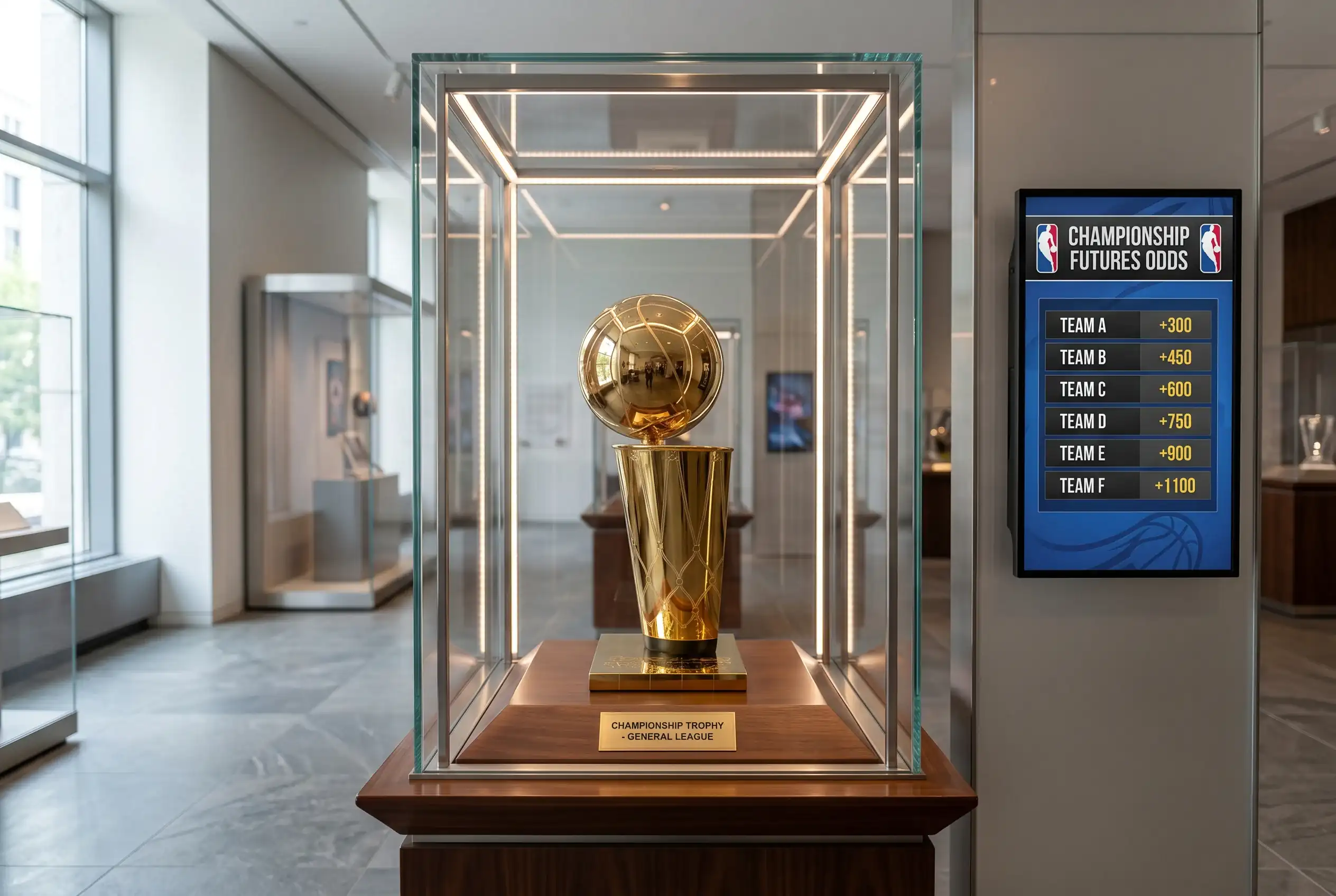
A futures bet is a wager on an outcome that will not be resolved for weeks or months. NBA championship futures, conference winners, division winners, MVP, Defensive Player of the Year, Rookie of the Year, these markets open before the season and remain active until the outcome is decided. The bookmaker’s margin on futures is typically higher than on single-game markets (8-15% on championship futures vs 4-5% on a standard spread), which means you need a proportionally larger edge to justify locking up capital.
Championship Futures From Pre-Season to Trade Deadline
Championship futures pricing follows a predictable arc. In September, before the season starts, the market is driven by narratives: offseason acquisitions, coaching changes, preseason buzz. This is when prices are their softest, meaning the gap between what the market thinks and what the data supports is at its widest. If you have done roster-level analysis and identified a team the public is undervaluing, pre-season is the best time to act.
By December, 25-30 games of real data have replaced the narratives. Prices compress toward reality, and the teams that are genuinely contending see their odds shorten. The value at this stage shifts from backing sleepers to identifying teams whose early struggles are being overpenalised. A contender that starts 12-10 due to a tough early schedule might see their championship price drift to 12.00 from an opening 7.00, and if the underlying metrics (net rating, strength of schedule adjusted record) suggest the slow start is a mirage, that drift creates a buying opportunity.
The trade deadline in February is the final inflection point. Roster upgrades compress contender prices aggressively. A team that adds a quality rotation player might see their price move from 8.00 to 5.50 overnight. Betting after the deadline means you are paying for information that is already priced in. Betting before the deadline means you are gambling on which teams will make moves, which is a different kind of analysis entirely, closer to front-office speculation than basketball handicapping.
MVP, DPOY and Rookie-of-the-Year Markets
Award futures are a different beast from championship futures because they are driven by individual performance and media narrative rather than team outcomes. The MVP race, in particular, is as much a storyline contest as a statistical one.
The optimal window for MVP futures is the first two weeks of the season. The market opens with a consensus top five based on preseason expectations, and any player who starts the season on a historic pace, averaging 35 points with elite efficiency, or posting a triple-double in four of his first five games, sees his price collapse immediately. If you have identified a candidate whose early-season usage and efficiency are sustainable (check the strength of early opponents), backing him before the first monthly award announcement captures the most value.
Defensive Player of the Year and Rookie of the Year are thinner markets with wider margins, but they also attract less sharp money, which means pricing inefficiencies survive longer. DPOY tends to go to a player on a top-ten defence whose individual counting stats (blocks, steals) are high enough to create a media narrative. If you can identify that player early – often a centre on a team with a strong defensive system – the pre-season price is usually generous.
Bill Krackomberger, a professional bettor, has observed that the kinds of prop and futures bets available now were once limited to Super Bowl weekend. The expansion of these markets into everyday NBA betting has created both opportunity and complexity for UK punters willing to engage with them seriously.
Hedging a Live Future Late in the Season
If your championship future is alive in the playoffs, you face a decision: ride it to the end or hedge. Hedging means betting against your future to lock in a guaranteed profit regardless of the outcome. The maths is straightforward but the psychology is brutal.
Suppose you backed a team at 12.00 with a 50-pound stake (potential return: 600 pounds). They are now in the conference finals at 2.50. Your future is worth 600 if they win, 0 if they lose. You can hedge by backing their opponent at the series price, distributing your guaranteed profit across both outcomes. The amount to hedge depends on how much risk you want to retain – a full hedge locks in a fixed profit; a partial hedge reduces downside while keeping upside exposure.
My general rule: if the future represents more than 5% of my total bankroll in potential return, I hedge at least partially. The emotional weight of watching a six-month investment collapse in a Game 7 is not worth the marginal expected value gain from letting it ride.
The Hidden Cost: Tied-Up Capital
Every pound sitting in a futures bet is a pound that cannot be wagered on tonight’s NBA card. That opportunity cost is the hidden tax on futures betting that most punters ignore.
If your standard single-game betting generates a 3% return on investment over a season, then every pound locked in a future needs to generate more than 3% ROI to justify the allocation. A championship future at 12.00 that you assess at a true probability of 10% has a 20% expected value edge (10% true vs 8.33% implied). That is excellent – far above the 3% you would earn on nightly bets. But a future at 5.00 that you assess at 22% true probability has only a 10% edge, and the capital is locked for months.
The discipline is to size futures bets small relative to your bankroll – typically 0.5-1% of total bankroll per future – and to treat them as portfolio diversifiers rather than core holdings. Your nightly game-by-game bets are the engine of your bankroll growth. Futures are the long-duration positions that occasionally pay off handsomely but should not dominate your allocation. Understanding playoff context shifts helps you assess whether a live future is worth holding or hedging as the postseason unfolds.
When are championship futures historically softest?
Pre-season, before the first game is played. The market is driven by narratives, offseason hype, and preseason impressions rather than real game data. This is when the gap between market perception and analytical assessment is widest, creating the best opportunities for value.
Should an MVP bet be placed before or after All-Star break?
Before. The MVP narrative typically crystallises by January, and the price on leading candidates compresses sharply after the All-Star break as the media consensus solidifies. The best value is in the first two weeks of the season, when early performance data has not yet been fully priced into the market.
How do UK books handle dead-heat rules on awards?
Most UK-licensed bookmakers apply dead-heat rules if an award is shared between multiple recipients, dividing the payout proportionally. In practice, NBA awards are almost never shared – the voting structure produces a single winner – so dead-heat rules rarely apply to NBA futures.
Created by the ”Best nba Betting Strategy” editorial team.