NBA Playoffs vs Regular Season: How Strategy Must Shift
 Available in US

Why the Same Team Becomes a Different Bet in April
A team that went 52-30 in the regular season, covered spreads at 53%, and averaged 224 combined points per game can look completely unrecognisable by Game 3 of a first-round playoff series. I have watched it happen dozens of times: rotations tighten, pace drops, defensive effort triples, and every regular-season model you built becomes unreliable overnight. The playoffs are a different sport wearing the same jersey.
The structural shift is dramatic. Regular-season NBA is 82 games of resource management, teams balance winning today against preserving health for tomorrow. Playoff NBA is a seven-game series where tomorrow does not matter if you do not survive today. Coaches shorten rotations, star players absorb 40+ minutes, defensive schemes get personalised to the opposing team’s tendencies, and game scripts slow down because possession value increases when every game might decide the series.
Rotation Shrinkage and Stars’ Minutes
During the regular season, most NBA teams use 9-10 players in a meaningful rotation. In the playoffs, that number drops to 7-8, sometimes fewer. The bottom three players in the regular rotation might see their minutes cut to zero, not because they are injured but because the coach trusts only his core group in high-leverage moments.
This shrinkage has direct betting implications. Player prop baselines from the regular season become inaccurate because the star’s minutes increase (more scoring, more assists, more rebounds) while role players’ minutes evaporate. A bench scorer averaging 12 points per game in the regular season might average 4 in the playoffs simply because he is playing 14 minutes instead of 24.
More than 20% of starting-calibre players were being rested during the final two weeks of the 2025-26 regular season. Once the playoffs begin, that pattern reverses completely – everyone plays, and the intensity per minute jumps. Your regular-season efficiency numbers were generated in games where stars played 33 minutes and coasted through fourth quarters of decided games. Playoff efficiency is generated in 40-minute, maximum-effort contests. The numbers are not interchangeable.
Playoff Pace: Slower, Tighter, Tougher to Cover
Playoff pace drops consistently from regular-season levels. Teams play fewer possessions because they run more half-court offence, take fewer transition opportunities, and value each possession more highly. The result is lower-scoring games with tighter margins.
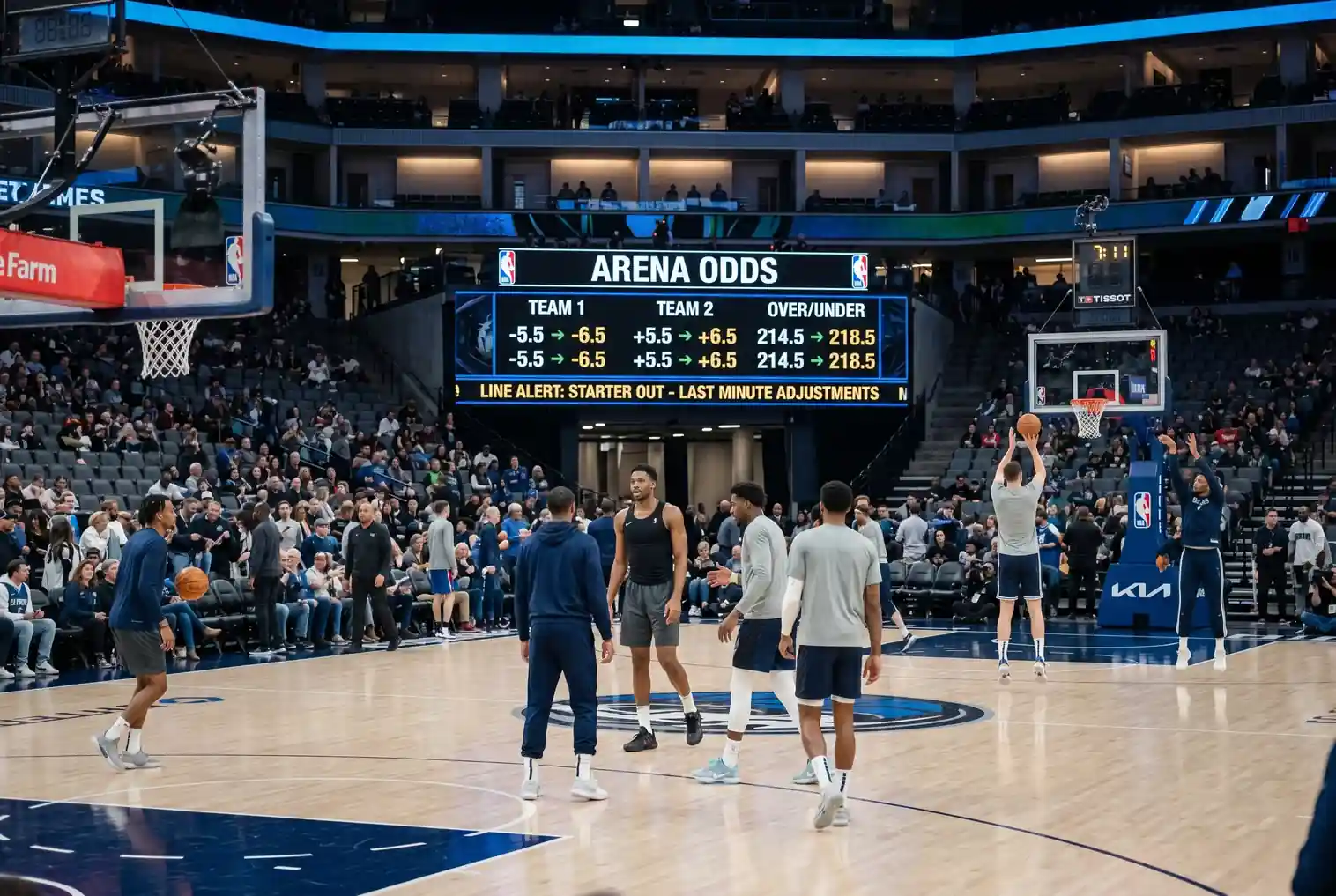
For totals bettors, this means the regular-season average of 220-224 combined points is too high as a baseline. Playoff games, particularly in the later rounds, routinely land in the 205-215 range. The bookmaker adjusts for this, but often not aggressively enough in the first round – the market is still anchored to regular-season scoring patterns, and the adjustment catches up gradually as each round progresses.
For spread bettors, the pace compression means fewer blowouts. Regular-season games produce 15+ point margins with reasonable frequency. Playoff games, especially after the first round, are much more likely to land within single digits. A team favoured by -7.5 in a regular-season game might deserve -5.5 in a playoff context against the same opponent, simply because the increased defensive effort and reduced pace compress margins.
Series Prices and Game-by-Game Adjustments
Playoff betting offers two distinct markets: series prices (who wins the best-of-seven) and individual game lines. The strategic choice between them depends on your information edge and your risk tolerance.
Series prices are most valuable when you believe the market has the matchup wrong at a structural level. If you think a 5-seed’s defensive scheme specifically neutralises a 4-seed’s offensive system – a matchup the market has not fully processed – the series price captures that view for the entire series. Game-by-game betting is more valuable when you believe situational edges will develop: home-court swings, injury developments, or coaching adjustments that shift the line between games.
The hybrid approach I prefer is to take a small series position pre-series if I have a structural view, then look for game-by-game value as the series unfolds. Game 1 data is enormously informative – it reveals defensive schemes, rotation choices, and pace intent that were not knowable beforehand. Using Game 1 data to refine your thesis for Games 2-4 is one of the highest-ROI activities in NBA betting.
The Round-1 Underdog Cover Pattern
First-round underdogs in the NBA playoffs have shown a persistent tendency to cover spreads at a rate that exceeds the market’s expectations. The 2025 first round continued this pattern, with lower-seeded teams covering at above-average rates across multiple series.
The mechanism behind this pattern is not mysterious. First-round series pit a top-four seed against a five-through-eight seed – and by definition, every team in the playoffs had a winning record. The 8-seed is not a bad team; they are a good team with a specific set of skills that earned them a postseason spot. The market, however, often prices first-round series as if the higher seed’s regular-season dominance will translate directly to a playoff environment where pace drops, effort increases, and each game is played with series context.
The sharpest first-round underdog spots tend to share three characteristics: the dog has a defensive identity (they can slow the game down and control pace), the series features a stylistic mismatch that favours the dog’s approach, and the higher seed relied heavily on pace and transition offence during the regular season. When a fast team is forced to play at a slow team’s tempo in a playoff series, the favourite’s regular-season scoring advantage compresses – and spreads set based on that advantage become exploitable.
The game-by-game dynamic matters too. Underdogs tend to cover more often in Games 1 and 2 (where the higher seed’s home crowd creates overconfidence in the market) and in potential elimination games (where desperation sharpens effort). Understanding futures pricing across the calendar helps you see how the series price moves in response to individual game results and where the market overadjusts.
Do unders historically cash more often in the playoffs?
Yes, particularly in the later rounds. Playoff pace drops consistently from regular-season levels due to increased defensive intensity and half-court play. The market adjusts gradually rather than immediately, which means early-round totals are often set too high relative to actual playoff scoring patterns.
When is a +5 dog actually worth backing in a playoff series?
A +5 or larger underdog is most valuable when the dog has a strong defensive identity and the ability to control pace. If the underdog can force a slow, half-court game that neutralises the favourite’s transition offence, the spread often overestimates the favourite’s margin. First-round games and potential elimination games are the highest-probability spots for underdog covers.
Should I bet game-by-game or take the series price?
It depends on the nature of your edge. If you believe the market has the overall matchup wrong, the series price captures that view efficiently. If you expect situational edges to develop game by game through coaching adjustments or injury updates, individual game betting offers more flexibility. A hybrid approach with a small series position plus selective game bets works well for many punters.
Written by the editors at Best nba Betting Strategy.