NBA Injury Line Overshoot: The Two-Minute Window
 Available in US
What “Overshoot” Means on a Live NBA Line
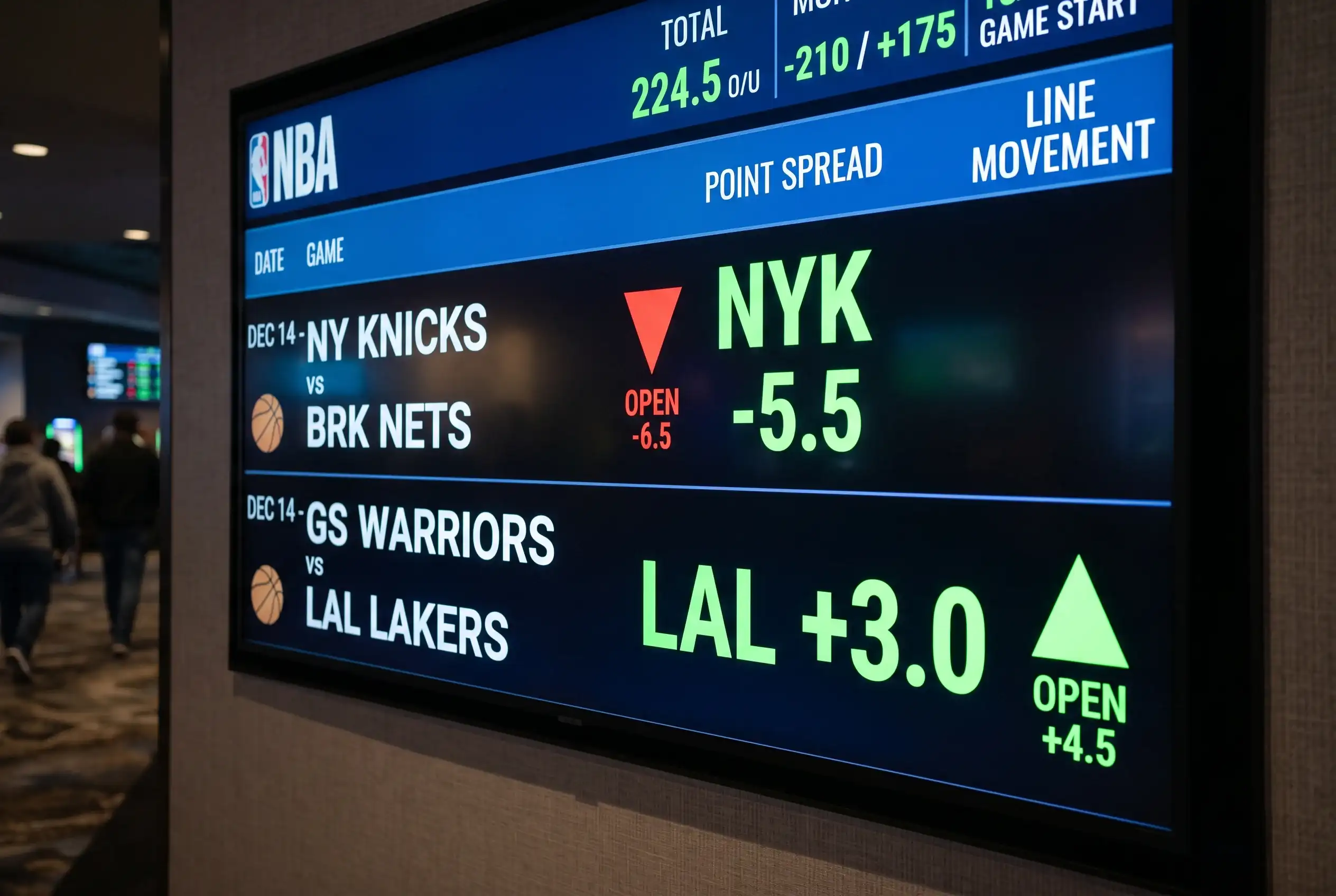
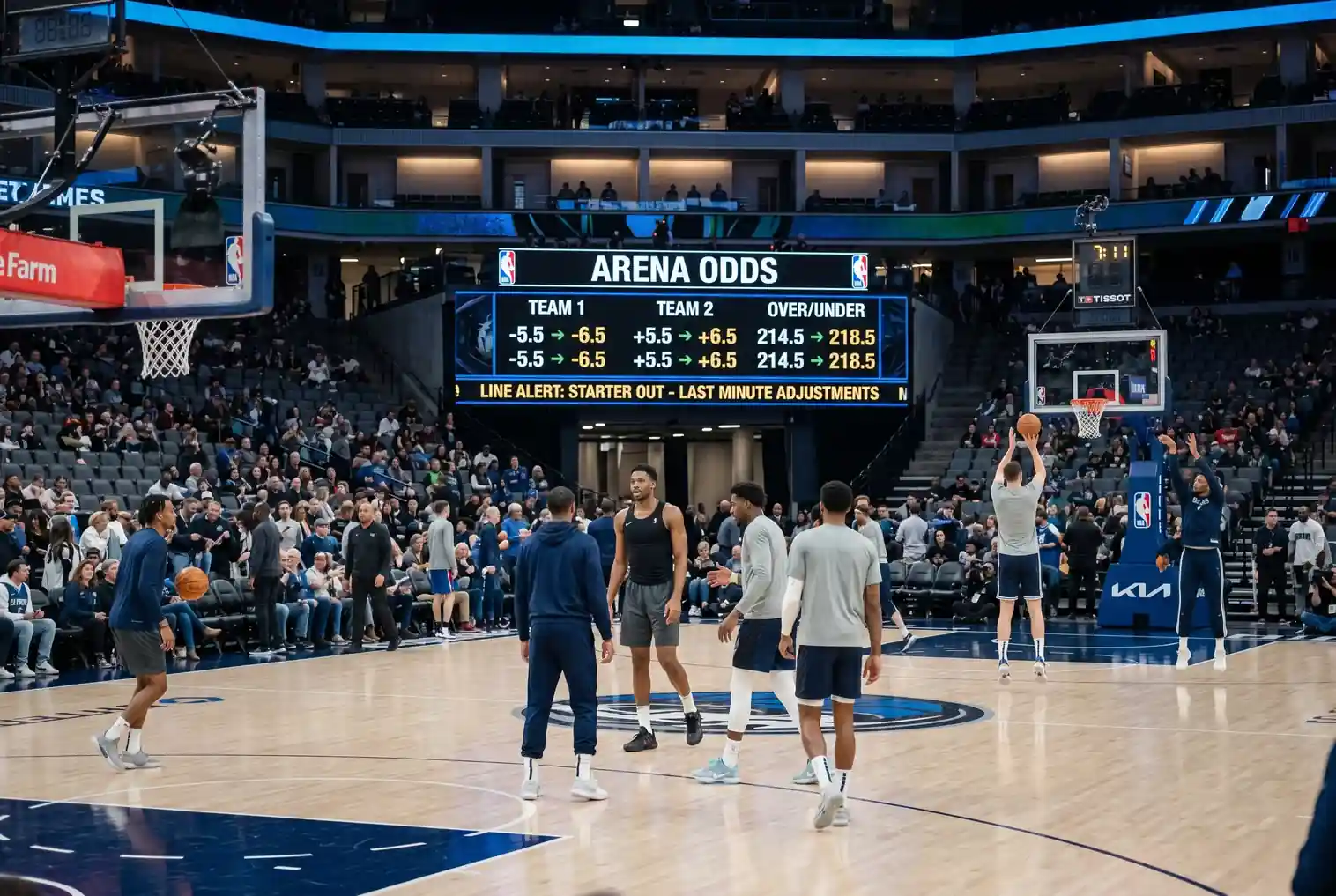
Picture this: a starting point guard is ruled out during warm-ups, fifteen minutes before tip-off. Within thirty seconds the spread jumps from -5.5 to -2.5. One minute later it settles at -3.0. Two minutes after that it sits at -3.5, where it will stay until tip-off. That initial leap to -2.5 was too far, the market panicked, overestimated the impact, and then corrected. That gap between -2.5 and -3.5 is what I call the overshoot, and it happens predictably enough that I build part of my weekly card around it.
Overshoot occurs because the initial price adjustment is driven by algorithms reacting to the news, not by humans modelling the specific impact. The algorithm knows a starting point guard is worth roughly X points to the spread based on historical data. But it does not always account for the quality of the backup, the specific matchup that night, or whether the missing player was even playing well in recent games. The first price it posts is a rough estimate, and the sharp money that flows in during the next 90 seconds corrects it.
Typical Magnitudes for Star, Co-Star and Role Outs
When a genuine superstar – a top-15 player – is ruled out, the initial line movement is typically 3-4 points on the spread and 3-5 points on the total. The overshoot in these cases tends to be smaller in percentage terms (maybe half a point) because the algorithm’s historical data on star absences is robust. The market has seen plenty of games without the league’s best players and has a well-calibrated model for the adjustment.
Co-stars – second or third options averaging 18-22 points – produce messier movements. The initial adjustment might be 1.5-2.5 points, but the overshoot can be a full point because the algorithm has less data on this specific player’s absence. Some co-stars are seamlessly replaceable by the next man up; others leave a gap in the rotation that the team cannot plug. The market does not always distinguish between these two scenarios quickly enough.
Role players produce the most exploitable overshoots relative to their actual impact. A starting centre ruled out might move the spread by 1 point initially, but the algorithm sometimes overshoots to 1.5 points because it treats all centres as interchangeable. If the backup centre is a veteran who thrives in exactly this matchup, the real impact might be closer to 0.5 points. That full point of overshoot creates a window where the opposite side of the spread is mispriced.
The Two-Minute Window and Why It Closes
Two minutes. That is approximately how long the overshoot window stays open, per analysis of live-line reactions after injury announcements. Within 120 seconds, enough sharp money enters the market to push the line back toward its correct level. After that, the price reflects the informed consensus of professional bettors who have modelled the specific impact.
The window closes for a simple reason: professional bettors have the same injury alerts you do, and they have pre-built models that calculate the precise spread adjustment for every player on every team. When a starter is ruled out, these bettors compare the algorithm’s initial price to their model’s fair price and bet the difference. Their volume pushes the line from its overshooting level to the corrected level within minutes.
For UK punters, the practical challenge is timing. If you are watching the pre-game reports and see a late scratch announced, you have roughly two minutes to place a bet at the overshoot price before it corrects. That requires having your accounts funded, your betting apps open, and your own quick assessment of whether the overshoot is genuine (the line moved too far) or accurate (the line moved exactly the right amount). Not every late scratch produces an overshoot – sometimes the algorithm gets it right on the first try.
When the Overshoot Goes the Other Way
Not every overshoot favours the team that lost the player. Occasionally the market under-reacts to a significant absence, particularly when the ruled-out player has been struggling through a slump or a nagging injury that has limited his effectiveness for weeks. The algorithm applies its standard adjustment based on the player’s season-long value, but the sharps know that this particular player has been a net negative in his last five games. The line barely moves – or moves less than expected – and the sharp money pushes it further in the same direction rather than correcting it back. Recognising these inverse overshoots requires tracking recent form, not just season averages.
I keep a simple spreadsheet that logs each player’s on-off net rating over their last ten games alongside their season number. When those two figures diverge significantly – say a player whose season net rating is +4.0 but whose last-ten figure is -1.2 – I flag that player as a potential inverse-overshoot candidate. If he is ruled out and the line moves as though his season-long value is accurate, the real adjustment should be smaller (or even reversed), and the opposite side of the market is where the value lies.
Tactics for UK Punters Who Are Watching Live
The overshoot play is not a passive strategy. It requires preparation before the game and speed during the event. Here is how I approach it.
Before the game: I identify all Questionable and Doubtful players on tonight’s card. For each one, I estimate the fair spread adjustment if they sit, using their on-off net rating differential as the primary input. If the player is +5.0 points per 100 possessions better than his replacement, the fair adjustment is roughly 2-2.5 points on the spread (adjusted for minutes). I write this number down next to the game.
During the warm-up window: when a decision is announced, I immediately check the live spread. If the market has moved further than my pre-calculated fair adjustment, the overshoot is real and I bet the side that benefits from the correction (usually the team whose player was just ruled out, because the market overestimated the negative impact). If the movement matches my estimate, I pass.
The discipline is strict: I only take the bet if the overshoot exceeds my estimate by at least half a point. Anything less is within the noise of the adjustment and not worth the risk. This filter keeps me from chasing every late scratch and focuses my action on the highest-probability opportunities.
One additional layer: the overshoot pattern is slightly more pronounced in games that are not nationally televised. High-profile games attract more sharp attention at every moment, which means the algorithm gets corrected faster and the overshoot window is shorter. Lower-profile games on a Tuesday night have thinner markets and slower corrections, giving UK punters watching at 1 AM an extra thirty seconds of window. That extra time matters when you are reading the broader injury read and forming your assessment.
How big is a typical overshoot in points?
For a superstar absence, the overshoot is usually 0.5-1 point beyond the fair adjustment. For co-stars, it can reach 1 full point. For role players, the overshoot relative to actual impact can be 0.5-1.5 points because the market has less data on specific replacement-player quality.
Do all UK books overshoot equally?
No. Different operators use different algorithms and different sources of sharp-money flow. Some books are faster to correct because they attract more professional volume; others hold their initial price longer. Comparing the same line across three operators during a late-scratch announcement reveals which books are slower to adjust, and those are the ones most likely to offer an exploitable overshoot price.
Is overshoot smaller during nationally televised games?
Yes. High-profile games attract more sharp betting attention, which means the algorithm gets corrected faster and the overshoot window shrinks from roughly two minutes to under one minute. Lower-profile games with thinner betting markets tend to produce larger and longer-lasting overshoots.
Published by the Best nba Betting Strategy team.