UKGC Rules That Affect NBA Betting Accounts
 Available in US
What UKGC Rules Mean for Day-to-Day NBA Betting
The UK Gambling Commission sits between you and your bookmaker in ways that most punters never think about until something goes wrong. I have had bets delayed, accounts frozen, and withdrawal requests queried, all because a UKGC-mandated process kicked in at an inconvenient moment. None of it was the bookmaker being difficult. All of it was the regulator’s framework doing what it was designed to do. Understanding these rules before they surprise you is the difference between a minor inconvenience and a genuine disruption to your betting routine.
The UKGC regulates every aspect of the relationship between a UK punter and a licensed bookmaker: how you open an account, how much you can deposit, when the book can ask you to prove you can afford your bets, and what happens when a dispute arises. The framework applies to all UK-licensed operators, which means your rights and obligations are consistent regardless of which sportsbook you use for NBA betting. Andrew Rhodes, the Commission’s chief executive, has described the UK gambling market as a mass-participation activity involving some 22.5 million regular consumers, and the regulatory machinery is built to match that scale.
KYC, Source of Funds and Deposit Limits
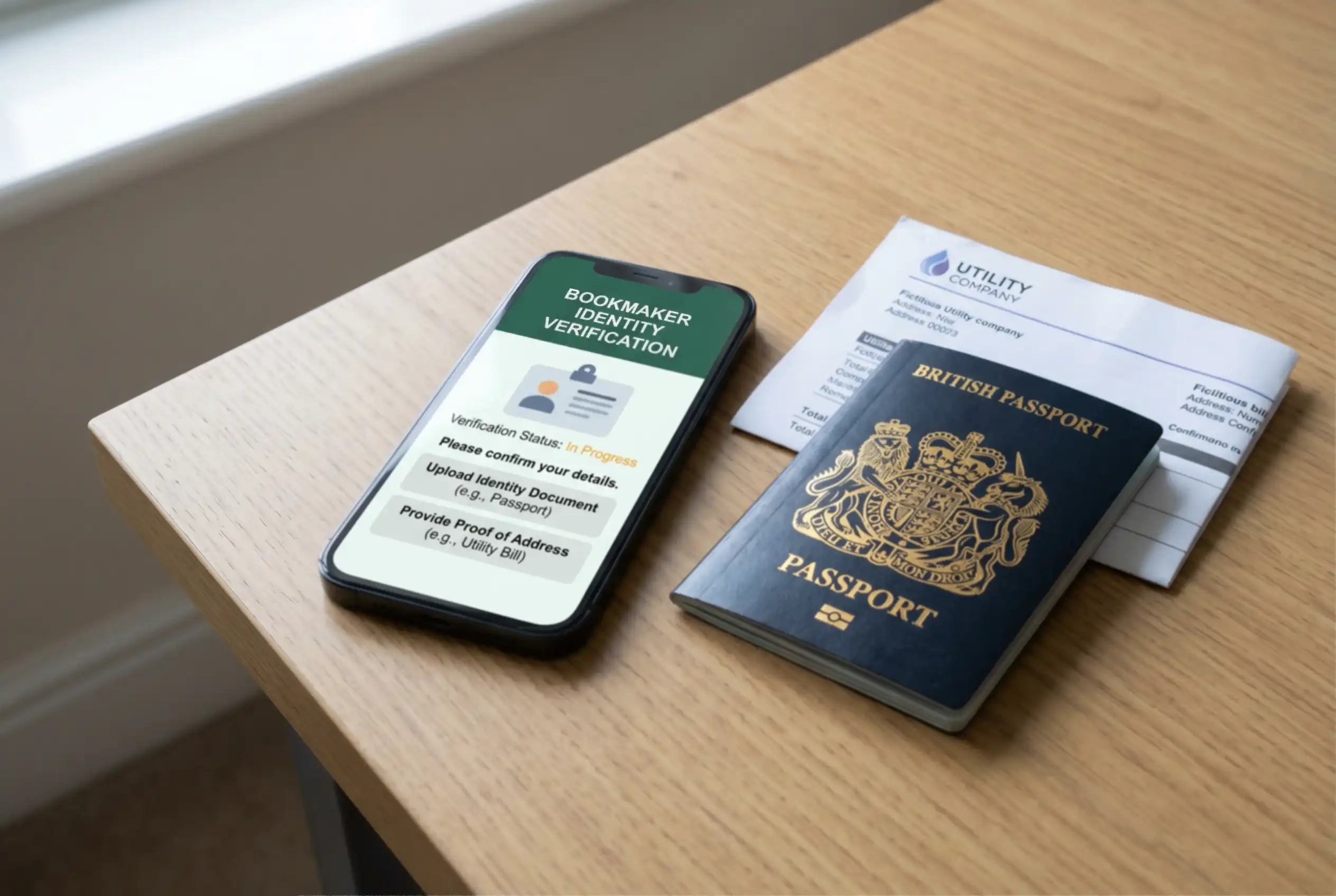
Know Your Customer verification is the first gate every UK bettor passes through. Before you can deposit or bet, the bookmaker must verify your identity, typically using your name, date of birth, and address against a credit-reference database. This process is usually instant, but in about 5-10% of cases it requires manual document submission: a passport or driving licence, a utility bill or bank statement. If you are opening a new account specifically for an NBA game tonight, build in 24 hours of buffer in case manual verification is required.
Source of funds checks go a step further. When your deposits reach a certain threshold, which varies by operator but commonly sits between 2,000 and 5,000 pounds within a rolling 12-month period, the bookmaker may ask you to demonstrate where your money comes from. This typically means providing a payslip, a bank statement showing salary deposits, or evidence of savings. The request is not an accusation; it is a regulatory requirement that the operator must fulfil to maintain their UKGC licence.
Deposit limits are set by the punter, not the bookmaker, under current UKGC rules. You can set daily, weekly, or monthly deposit caps on your account, and the book must enforce them without exception once activated. A cooling-off period applies before limits can be increased. For NBA bettors managing a structured bankroll, setting a monthly deposit limit that matches your bankroll plan is a sensible guardrail that also signals to the bookmaker that you are a responsible customer.
Affordability Checks and Their Triggers
Affordability checks have been the most contentious element of UK gambling regulation in recent years. The UKGC requires operators to monitor customer behaviour for signs that spending exceeds what the customer can afford, and to intervene when those signs appear. In practice, this means the bookmaker runs automated checks against your deposit and loss patterns, and may trigger a manual review if your activity crosses certain thresholds.
The triggers are not publicly standardised – each operator sets its own thresholds within the UKGC’s framework – but common patterns include: net losses exceeding 2,000 pounds in a month, deposit velocity increasing sharply (for example, three deposits in one day when your normal pattern is one per week), or cumulative deposits over a 12-month period reaching certain levels. When a check is triggered, the operator may ask for additional financial documentation, reduce your deposit limits temporarily, or in extreme cases pause your account until the review is complete.
For NBA bettors who stake regularly across a long season, affordability checks are a practical reality that requires planning. If you know your annual NBA betting volume will exceed 10,000 pounds in deposits, having your source-of-funds documentation ready before a check is triggered avoids the frustration of a frozen account on a Tuesday night when you have three games lined up.
Safer-Gambling Tools You Can Actually Use
UKGC-licensed operators are required to offer a suite of safer-gambling tools, and several of them are genuinely useful for disciplined NBA bettors even if you have no gambling-related concerns. Reality checks – pop-up notifications that tell you how long you have been in a session and how much you have staked – are an underrated tool for in-play betting, where the rapid pace of NBA quarters can blur time perception. I have mine set to alert me every 45 minutes during a live-betting session, and it has saved me from at least a handful of impulsive late-night bets that I would have regretted.
Time-out periods let you lock yourself out of your account for a set duration – 24 hours, 7 days, or 30 days. I have used the 24-hour time-out after a bad night of results, not because I felt out of control but because I know my decision-making is worse when I am trying to recover losses. The UKGC also mandates self-exclusion through GamStop, which blocks you from all UK-licensed operators for a minimum of six months. That is a last-resort tool, but knowing it exists and how it works is part of understanding the regulatory landscape.
ADR and What To Do When a Bet Is Voided
Bet disputes happen. A bookmaker voids a settled bet citing a pricing error. A withdrawal is delayed beyond the published timeline. An account is restricted without clear explanation. When informal resolution fails, the UKGC requires every licensed operator to offer access to an Alternative Dispute Resolution provider – an independent body that reviews the dispute and issues a binding or non-binding decision depending on the ADR scheme.
The process is straightforward but slow. You first exhaust the bookmaker’s internal complaints procedure, which by UKGC rules must be concluded within eight weeks. If you are not satisfied with the outcome, the operator must direct you to their ADR provider. The ADR review can take an additional four to eight weeks. Across the industry, UKGC data shows that 96.3% of customer withdrawals are processed automatically, 3.5% clear within 24 hours, and only 0.1% take longer than 48 hours – so the vast majority of transactions proceed without incident. But for the rare dispute, knowing the ADR pathway protects your position and gives you a formal mechanism to challenge a decision you believe is wrong.
I keep a record of every voided bet and every account restriction I receive, including screenshots of the original bet slip and the bookmaker’s communication. That documentation is essential if you ever need to escalate to ADR, and it takes ten seconds to capture at the time of the event versus hours of reconstruction after the fact. The tax-side of UK punting may not require records, but the regulatory side very much rewards having them.
What deposit threshold typically triggers a source-of-funds check?
Thresholds vary by operator but commonly sit between 2,000 and 5,000 pounds in cumulative deposits over a rolling 12-month period. Some operators trigger checks earlier based on deposit velocity or loss patterns rather than absolute amounts. Having documentation ready in advance avoids delays.
Can a bookmaker void a settled NBA bet?
Yes, but only under specific circumstances outlined in their terms – most commonly a palpable pricing error where the odds were clearly incorrect. If you believe the voiding is unjustified, you can escalate through the operator’s complaints procedure and then to their ADR provider for independent review.
How do I escalate a dispute to ADR?
First, file a formal complaint with the bookmaker and allow up to eight weeks for their internal resolution. If unsatisfied, request details of their ADR provider, which they are required to disclose. Submit your case to the ADR body with supporting documentation. The review typically takes an additional four to eight weeks.
Created by the ”Best nba Betting Strategy” editorial team.