NBA Player Props After the 2025 Integrity Reset
 Available in US
The Prop Market Has Changed in 2025-26
I used to build half my weekly NBA card around player props. Points overs on volume scorers, rebound unders on small-ball lineups, assist overs on pass-first guards, it was a reliable subsection of the market where bookmaker pricing lagged behind usage-rate data. Then October 2025 happened, and the market shifted beneath everyone’s feet.
The federal indictments that landed in autumn 2025 did not just make headlines. They rewired how bookmakers approach individual player markets. The NBA asked its sportsbook partners to pull specific categories of player props, and UK-licensed operators followed suit within weeks. If you are still betting props the way you did in 2024, you are working with an outdated map.
Adam Silver put it plainly when discussing the challenges: he acknowledged that certain outcomes are too easy to manipulate when they seem small and inconsequential to the overall score, a couple of rebounds, a quiet assist tally. The league has been working with betting companies to install additional controls against that kind of manipulation. For UK punters, the practical result is a narrower but cleaner prop market than what existed twelve months ago.
What Happened: Porter, Rozier and the Federal Indictments
The timeline starts in 2024 with Jontay Porter, a Toronto Raptors player on a two-way contract who was banned for life after the NBA found he disclosed confidential information and bet on games. Porter’s case was the first concrete example of a player manipulating individual statistical outcomes for betting purposes, and it sent shockwaves through the league’s integrity department.
In October 2025, the FBI arrested Terry Rozier of the Miami Heat, former player and assistant coach Damon Jones, and Portland Trail Blazers head coach Chauncey Billups on federal charges related to illegal betting activity. Rozier posted a £3 million bail. The charges alleged a network of individuals with insider access to team information who exploited that access for betting purposes. The scope of the investigation, reaching a sitting head coach, elevated the scandal from a fringe incident to a structural concern.
The NBA’s response was swift. Following Porter’s case, the league had already requested that sportsbook partners remove under-prop bets on players with two-way contracts. After the Rozier-Billups arrests, the conversation expanded to whether certain prop categories should exist at all for lower-profile players whose statistical outputs are easier to influence without affecting the game’s outcome.
Why Under-Props on Two-Way Players Vanished
The logic behind removing under-props on two-way players is straightforward once you see the incentive structure. A two-way player earns significantly less than a standard NBA contract. Their minutes are unpredictable. And their individual statistical lines, 4 rebounds, 2 assists, 6 points, are low enough that a deliberate underperformance is nearly undetectable from normal variance.
If a bookmaker offers an under on a two-way player’s rebounds at 3.5, and that player simply stops boxing out for one game, the under cashes. Nobody watching the game notices because the player’s baseline is so low that a quiet night looks identical to a manipulated one. The plausible deniability is built into the market structure itself.
UK-licensed bookmakers largely complied with the NBA’s request. Most major operators removed under-props on two-way players and thinned their offerings on fringe rotation players. Some went further, reducing prop availability for any player averaging fewer than 20 minutes per game. The result is a prop market that concentrates on starters and primary rotation players – which, from a bettor’s perspective, is actually an improvement in market quality because the data on these players is richer and more predictive.
Prop Categories That Still Offer Value
The post-2025 prop market is not dead. It is different, and in some ways better for the disciplined analyst.
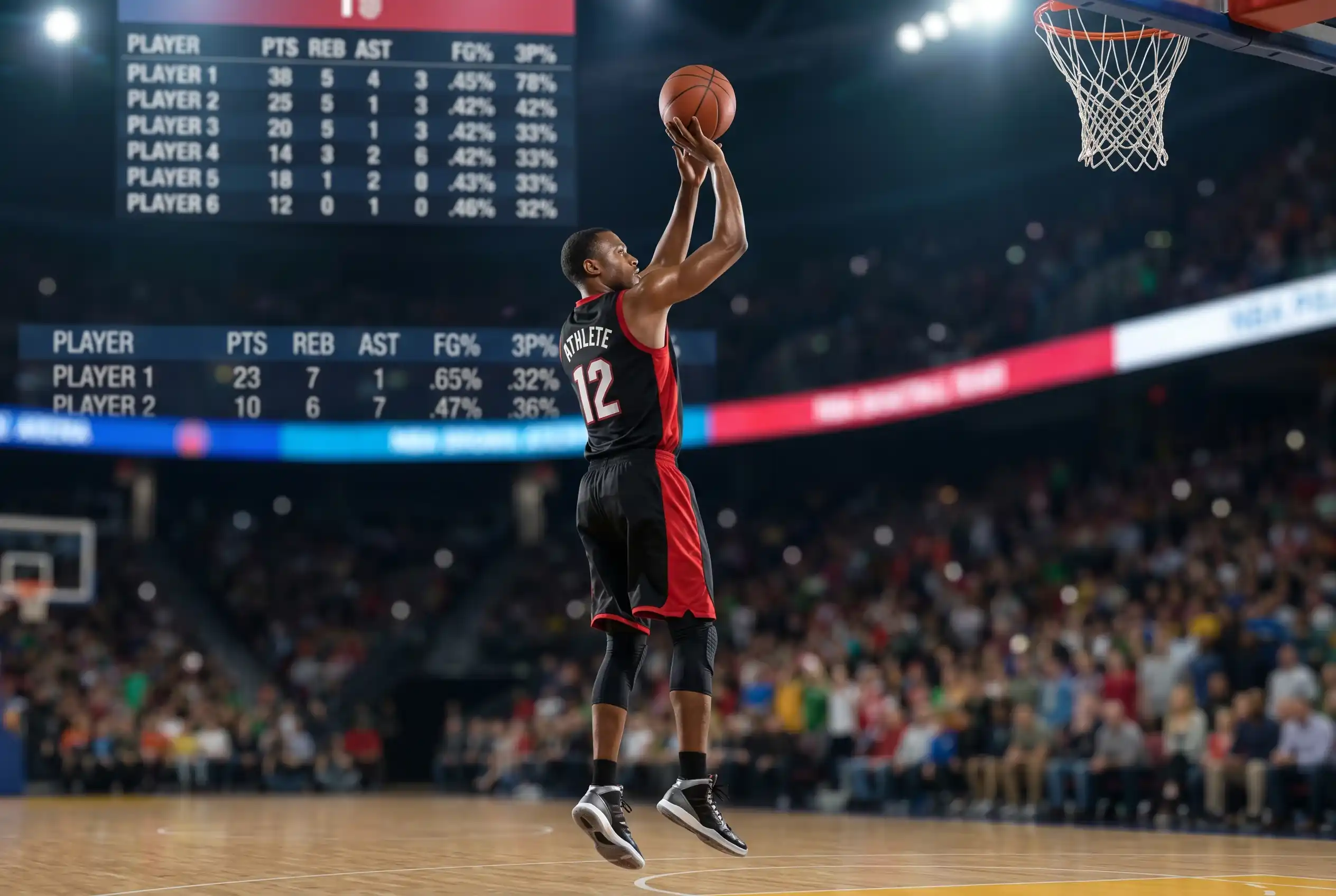
Points props on high-usage starters remain the deepest and most liquid category. These players log predictable minutes, have consistent shot volumes, and produce enough data that your projection model has real statistical power. The key input is usage rate – the percentage of team possessions a player uses while on the court. A player with a 30% usage rate on a team that plays at 100 possessions per game will have roughly 30 possessions to generate scoring. Multiply by their points-per-possession average and you have a projection that often disagrees with the bookmaker’s line by a meaningful margin.
Assists props for primary ball handlers are another category that survived the reset largely intact. Point guards who run the offence for 30-plus minutes produce assist totals that are highly correlated with team pace and shooting efficiency. When teammates shoot well, assist numbers go up – so projecting assists requires you to project the team’s shooting environment, which adds a useful layer of analysis beyond the individual player.
Combined stat props (points + rebounds + assists, or PRA) offer the most variance but also the most inefficiency. Because they aggregate three categories, the bookmaker’s margin compounds, but so does the informational edge if you are modelling all three inputs separately. I have found PRA overs on versatile forwards – players who score, rebound, and facilitate – to be the most consistently mispriced category in the current market.
Usage Rate and Pace as the Two Key Inputs
Every prop bet I place starts with two numbers: the player’s usage rate and the projected game pace. Everything else – matchup difficulty, home vs away, rest status – adjusts those two baseline figures, but it does not replace them.
Usage rate tells you the player’s share of the team’s offence. Pace tells you how many total opportunities exist. Multiply them and you have expected possessions used. From there, you apply the player’s efficiency metrics (true shooting percentage for points, assist rate for assists, rebound rate for rebounds) and you get a projection.
The mistake most punters make is ignoring pace entirely and looking only at the player’s season averages. A player averaging 22 points per game might do it in 100-possession games but drop to 18 in 93-possession games. If tonight’s opponent plays at the slowest pace in the league, that season average of 22 is misleading. Your projection should be pace-adjusted, and if the bookmaker’s line is not, you have an edge.
The integrity reset made this kind of rigorous analysis more important, not less. With fewer prop categories available and tighter scrutiny around broader market behaviour in the remaining ones, the punters who do the quantitative work will capture a larger share of whatever inefficiency the market still offers. The casual prop bettor who picked based on name recognition has lost their playground. The analytical prop bettor has gained a cleaner one.
Are unders on rebounds and assists still bookable in UK markets?
For starters and primary rotation players, yes. Most UK-licensed bookmakers still offer under-props on rebounds, assists, and points for players averaging significant minutes. The removal primarily targeted two-way contract players and fringe rotation pieces whose low baselines made manipulation difficult to detect.
How do bookmakers detect prop manipulation?
Bookmakers use algorithmic monitoring that flags unusual betting patterns – sudden surges of money on specific player unders, particularly from accounts with no history of prop betting. The NBA also operates its own integrity monitoring system that cross-references betting activity with game data and insider access patterns.
Should a casual punter ever bet on two-way players?
For most recreational UK punters, two-way player props carry disproportionate risk relative to the potential return. The data on these players is thin, their minutes are unpredictable, and the market has been specifically flagged as vulnerable to manipulation. Sticking to starters and established rotation players gives you a much stronger analytical foundation.
Created by the ”Best nba Betting Strategy” editorial team.