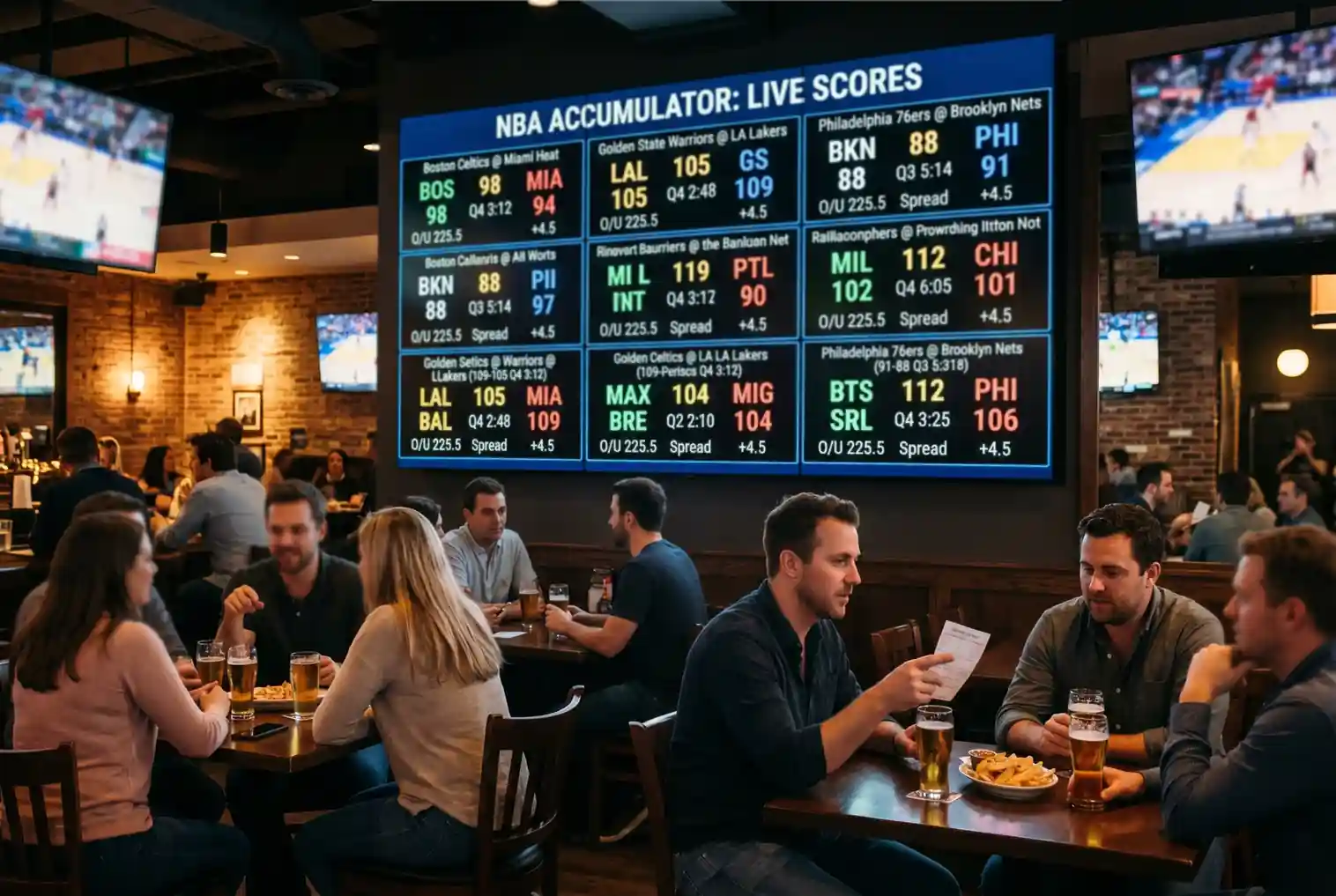
Closing Line Value: The NBA Bettor’s True Scorecard
 Available in US

The Metric That Changed How I Evaluate My Own Bets
For my first two seasons of serious NBA betting, I measured success the obvious way: profit and loss. Up 12 units? Good season. Down 8 units? Bad season. The problem with that scorecard is that it conflates skill with variance. A bettor can be profitable for 200 bets through luck alone, and unprofitable for 200 bets despite excellent analysis. Profit and loss over a single season tells you almost nothing about whether your process is sound.
Then I discovered closing line value, CLV, and it reframed everything. CLV measures whether the odds you received at the time you placed your bet were better than the odds available at tip-off. If you bet a team at +3.5 and the line closed at +2.5, you captured a full point of closing line value. That point means you were ahead of the market, and being consistently ahead of the market is the single most reliable predictor of long-term profitability in sports betting.
Why CLV Matters More Than Your Win Rate
The closing line is the market’s best estimate of the true probability of each outcome, because it incorporates all the information that flowed in between the opening line and tip-off, injury updates, sharp money, public money, weather, referee assignments, and everything else. The closing line is not perfect, but it is the most efficient price the market produces. If you consistently bet at prices better than the closing line, you are capturing value that the market eventually corrects away.
A bettor who averages 0.5 points of CLV per bet will be profitable in the long run, even if their win rate fluctuates wildly in any given month. A bettor who averages -0.5 points of CLV per bet will lose money in the long run, even if they are currently on a hot streak. CLV strips away the noise of individual results and reveals the signal of your underlying edge. It is the difference between a gambler who got lucky and a bettor who found value.
This is why sharp bettors track CLV religiously and barely glance at their weekly P&L. The P&L will converge toward the CLV over a large enough sample. A positive CLV guarantees long-term profit the same way a casino’s house edge guarantees long-term revenue, not on any individual bet, but across thousands of them.
How to Calculate CLV on Your Own Bets
The calculation is straightforward. For spread bets, CLV is the difference between the spread you received and the closing spread. If you bet Team A -4.5 and the line closed at -5.5, your CLV is +1.0 (you got a better number). If you bet Team B +6.5 and the line closed at +7.5, your CLV is -1.0 (you got a worse number, meaning the market moved against you after you bet).
For totals, the same logic applies. If you bet the over at 221.5 and the total closed at 223.5, you captured 2 points of CLV on your over bet (the market moved in your direction, confirming your read). For moneylines, you compare the implied probability at the time of your bet to the implied probability at the close. If you bet a team at +150 (40% implied) and they closed at +130 (43.5% implied), you captured roughly 3.5 percentage points of CLV.
I log every bet with two odds entries: the odds I received and the closing odds. At the end of each month, I calculate my average CLV across all bets. If the average is positive, my process is working, the market is confirming my reads. If the average is negative, something in my process needs correction, regardless of whether I happened to be profitable that month through variance.
Timing Your Bets to Maximise CLV
The timing of your bet directly affects your CLV, because the line moves between the time you bet and the close. In the NBA, there are two primary windows where CLV is most available. The first is the overnight window: lines open in the evening (UK time) and the earliest sharp money hits them within the first few hours. If you can identify the same information the sharps are acting on – schedule spots, injury intelligence, matchup advantages – and bet before the line moves, you capture the CLV that the sharp money creates.
The second window is the injury-reaction window. When a significant player is ruled out, the line moves quickly but imprecisely, as we discussed in the context of overshoot. Betting during the overshoot – when the line has moved too far – captures CLV because the line will correct back toward the fair price by tip-off. This window is narrower (roughly two minutes) but the CLV captured per bet is higher.
The worst time to bet, from a CLV perspective, is right before tip-off. By then, all the sharp money has been absorbed, all the injury information is priced in, and the line is at its most efficient. Betting at the close means you are getting the market’s best price, which by definition offers zero CLV. You are betting at fair value, and fair value is not profitable after accounting for the bookmaker’s margin.
CLV as a Diagnostic Tool
Beyond measuring your overall edge, CLV data reveals patterns in your betting that P&L alone cannot. For example, my CLV data showed me that my spread bets captured an average of +0.7 points of CLV, but my totals bets captured only +0.1 points. The implication was clear: my spread analysis was significantly ahead of the market, but my totals analysis was barely breaking even. I reallocated my volume accordingly – more spread bets, fewer totals bets – and my overall profitability improved.
CLV also reveals which bet types and which times of day produce the most value. If your early-morning bets (placed when lines first open) capture more CLV than your afternoon bets, you should shift your volume toward the morning window. If your bets on home underdogs capture more CLV than your bets on road favourites, you have found a niche where your analysis is sharpest, and you should lean into it.
For UK punters, CLV tracking has a practical benefit beyond analytics: it helps you identify which bookmakers are slowest to adjust their lines. If one operator consistently offers prices that are further from the closing line than others, that operator is your primary account for early-line bets. Protecting that account – avoiding behaviour that marks you as a sharp and triggers restrictions – becomes a priority, because it is your primary source of UK-specific betting value.
How many bets do I need before CLV data is meaningful?
A minimum of 100 bets is necessary before CLV data becomes a reliable indicator of your process quality. Below that threshold, individual outliers can skew the average significantly. At 200+ bets, the CLV average stabilises enough to make confident conclusions about whether your approach is generating genuine value.
Can I have positive CLV and still lose money?
Yes, in the short term. CLV measures your edge against the market, not your results against the actual outcomes. Positive CLV guarantees long-term profit across thousands of bets, but over any 100-bet sample, variance can produce losses even with a genuine edge. This is precisely why CLV is a better measure of skill than short-term profit.
Prepared by the Best nba Betting Strategy editorial staff.